Share Trading Limit in Nepal : SEBON's New directive on trading worth 1 million for share trading investors
Oct Sun 2026 06:07:06
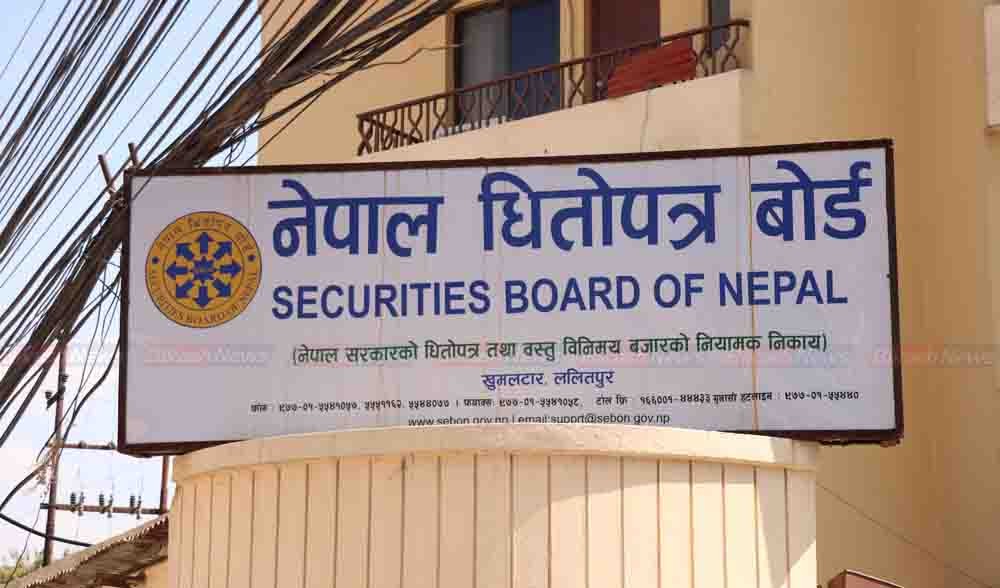
The Securities and Exchange Board of Nepal (SEBON) has implemented the Anti-Money Laundering and Financing of Terrorism Financing Directive, 2083. Following this directive, which was issued by the board and will be effective from Ashoj 30, 2083 various questions and doubts have been raised among investors trading in the stock market. There is a discussion, especially regarding the provision that investors who trade shares worth one million rupees or more in a single day must provide details of their transactions and disclose the source of the funds.
After the new directive was made public, some investors are raising questions about whether large-scale share transactions should not be allowed, whether they will face problems if they cannot prove their source of income, or whether they will now have to face additional hassles when selling and buying shares. Some interpretations have shown this provision as a new and extraordinary measure, which has further increased investor confusion.
Section 13 of the Directive on Prevention of Money Laundering and Financial Investment in Terrorism, 2083, issued by SEBON, contains provisions regarding limit transactions. According to this, if an individual or legal entity trades securities worth one million rupees or more in a day, either once or repeatedly, the concerned index institution must provide details of the transaction to the Financial Information Unit.
According to the directive, such details must be sent through the software specified by the Financial Information Unit within 15 days of the date of the transaction. In addition, there is a provision that the concerned index institution must keep separate records of the transaction amount, accounting, and source of the amount used in the transaction.
According to the regulation, it seems to be related to the process of keeping details of transactions, preparing necessary records and sending reports to the concerned bodies. Section 13 does not mention the provision that transactions of Rs 1 million or more cannot be made, that such transactions are automatically illegal or that action will be taken against the investor based on the transaction.
To understand the confusion that has arisen regarding the new directive, it is necessary to refer to the Prevention of Money Laundering and Financing of Terrorism Activities Directive, 2074 BS issued by SEBON.
Under Chapter 3 of the said directive, Section 26 had provided for the provision of details of transactions exceeding the limit. According to that section, if a customer transacts Rs 1 million or more in a single or repeated transaction in a day, the details of such transactions had to be provided to the Financial Information Unit within 15 days in the format specified in the schedule.
Similarly, the old directive included a provision that the index institution should prepare separate records related to the amount of transactions and accounting of Rs 1 million or more and keep the records updated by requesting the source of the amount used in the transaction from the customer.
The old regulation also mentioned the deadline for sending transaction details, records related to the source of funds, and the need to keep records. This shows that the concept of maintaining a transaction limit of Rs 1 million, detailed reports, and records related to the source of funds is not new to the stock market.
There are three main issues that investors need to understand regarding SEBON's new directive. First, the provision for maintaining and reporting details of securities transactions of Rs 1 million or more in a day was also in the 2074 BS directive. Second, the transaction is not automatically illegal if it exceeds the limit specified in Section 13 of the new directive. Third, it is appropriate for investors to maintain systematic records related to the source of funds used in the transaction.
It is the responsibility of every investor to comply with the prevailing laws while trading in the stock market. However, complying with the law and being afraid of the name of the law are different matters. It cannot be concluded that the provision for making financial transactions transparent has come with the intention of preventing legitimate transactions by investors.
Related post

- Digital ICT Media PVT LTD (A Women Group)
- Tarkeshwor, Kathmandu, Nepal
- digitalictmedia@gmail.com
© 2026 All right Reversed.Banks Nepal Pvt Ltd