
Mahaprasad Adhikari's 5 years term governor post has completed and a dozen suggestions for the new governor
Apr Sun 2025 04:39:03
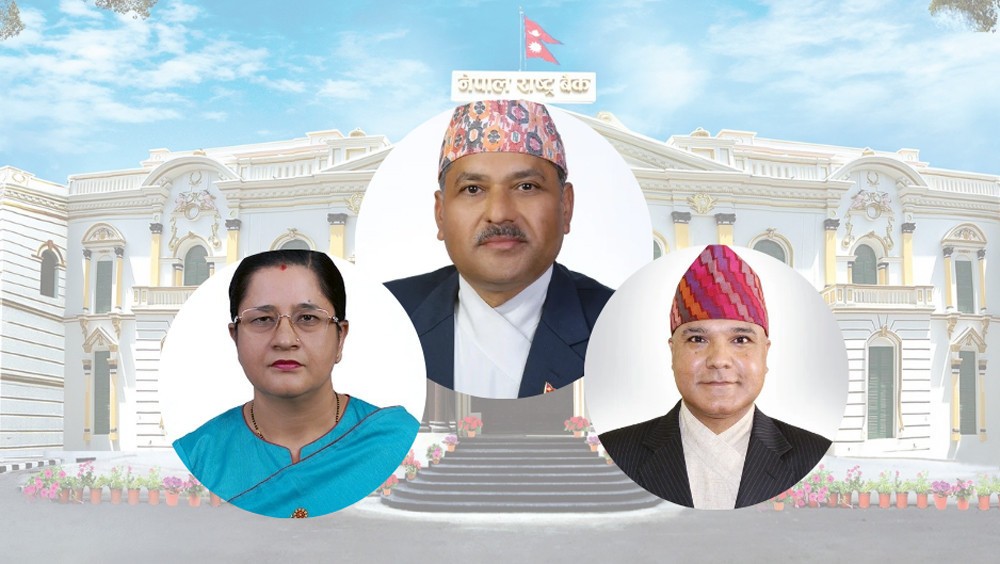
Kathmandu - The five-year term of Nepal Rastra Bank Governor Maha Prasad Adhikari has ended. On this occasion, holding a press conference at the bank's central office, Governor Adhikari said that he has succeeded in maintaining the country's economic stability by reforming monetary policy while facing the economic challenges arising from the Covid pandemic, the Russia-Ukraine war, and the supply crisis.
Maha Prasad Adhikari, who joined Nepal Rastra Bank as the 17th Governor in 2076 BS, has made public his 5-year achievements at the end of his term. Governor Adhikari, while making public the 192-page long achievements, mentioned many achievements during his tenure.
He faced many challenges when he became the Governor at a time when the economy was heading towards a state of collapse due to the Corona pandemic. At that time, Maha Prasad's main challenge was to protect the autonomy and reputation of the Rastra Bank. Similarly, he was also challenged to take steps to reduce the risks associated with financial technology and increase public confidence in the use of technology.
In the report published while leaving the Rastra Bank, Governor Adhikari has given 12-point suggestions to the next governor for economic reform. In the suggestions, he has covered issues ranging from share collateral loans to digital payments.
MahaPrasad Adhikari's 12-point suggestions to the new governor :
Only if the country's economic activities can be directed towards productive sectors through structural reforms, will the demand for credit also increase in those sectors, and the financial sector should gradually increase credit investment in the specified productive sectors on the basis that it can contribute more to economic growth and job creation. Its effective implementation is necessary.
2. The role of the recently implemented Monetary Policy Advisory Committee should be further strengthened, while the existing monetary policy, which is becoming more data-based, should be modernized and the transmission mechanism should be further strengthened.
3. If stakeholders can be made aware of the legal responsibilities assigned to monetary policy and the limitations of monetary policy to meet growing public expectations, it would be easier for monetary policy to fulfill its primary responsibility. Efforts have been made to gradually separate the regulatory policy, foreign exchange policy, and other provisions currently included in monetary policy from monetary policy and issue them separately.
By gradually separating the subjects, the central bank's communication should be made more effective and the general stakeholders should be made more aware of the bank's policy arrangements and activities.
4. The Nepalese currency has a fixed exchange rate with the Indian currency and the current exchange rate has not changed for a long time. It would be appropriate to conduct a detailed study on the existing foreign exchange arrangements and fixed exchange rates in accordance with the changes in the economic structure of Nepal and India.
5. In view of the increasing impact of climate change, the necessary initiatives to implement the green transformation of the economy and to obtain national recognition of the document should be continued.
6. To make the regulation and supervision of the financial sector more effective, priority should be given to information-based risk-focused supervision by making full use of the 'Supervisory Information System' of the 'Suptech' nature. In addition to the implementation of AML supervision and working capital loan guidance, micro stress testing, specialized monitoring of potentially problematic institutions should be arranged.
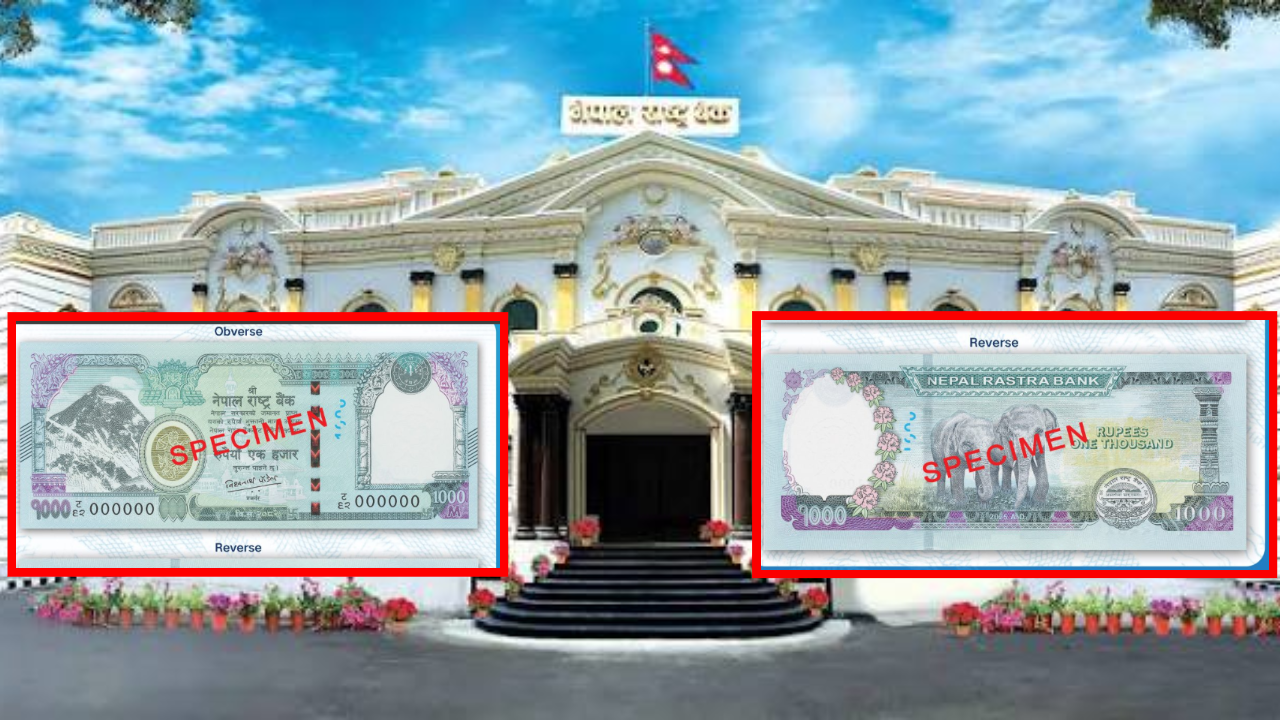
7. As a result of the increasing use of electronic payments in recent years, the amount of notes in circulation has been decreasing. However, this year, in the context of an increase in circulation again, it has been decided to conduct a detailed study. Since the printing of Rs. 1000 notes among the high-denomination notes was canceled earlier, printing of notes of that denomination will have to be done only after deciding on a completely new design.
The following actions should be taken regarding electronic payments:
(a) The expansion of electronic payments should be further promoted and encouraged.
(b) To make electronic payments more secure, it is necessary to continuously emphasize investment in infrastructure, cyber security, financial literacy and customer protection.
(c) As NCHL is being developed as a digital public infrastructure institution, it should be strategically developed as a public institution for electronic payments.
(d) By making full use of the retail payment switch that has been in operation for a few years and the recently launched national payment switch, a system should be implemented where all payments are routed through the switch.
(e) All retail payments, including QR payments, should be gradually interconnected.
(f) Based on the progress made so far regarding CBDC, it should be launched within a few years.
(g) The recently launched cross-border electronic payment service should be further promoted.
8. In view of the increasing use of artificial intelligence, its use in Nepal's financial sector should be managed. If the guidelines on the use of artificial intelligence in banks and financial institutions, which are in the process of being formulated, can be implemented and additional policy arrangements and regular monitoring can be made, Nepal's financial sector is likely to benefit from the use of artificial intelligence. The central bank itself should also continue to use artificial intelligence in activities such as continuous monitoring of financial institutions and payment systems, analysis of micro-data and making forecasting more effective. For this, it is necessary to invest in the necessary policy arrangements and capacity development of employees.
9. The concept of margin trading should be encouraged by gradually reducing direct loan investments by banks and financial institutions in the securities market. For this, Nepal Rastra Bank has already agreed to provide margin trading facilities to securities brokerage companies. Effective implementation of the said arrangement should be prioritized in coordination with other stakeholders of the capital market.
10. The role of the central bank should be made more effective in line with the federal structure. In view of the decrease in money management and banking-related work in provincial offices due to the increasing use of electronic payments, provincial offices should be focused on issues such as study, research, supervision and monitoring of financial institutions, financial awareness and customer protection. For this, additional physical infrastructure should be constructed in provincial offices and the capacity of human resources should be developed by upgrading the existing infrastructure.
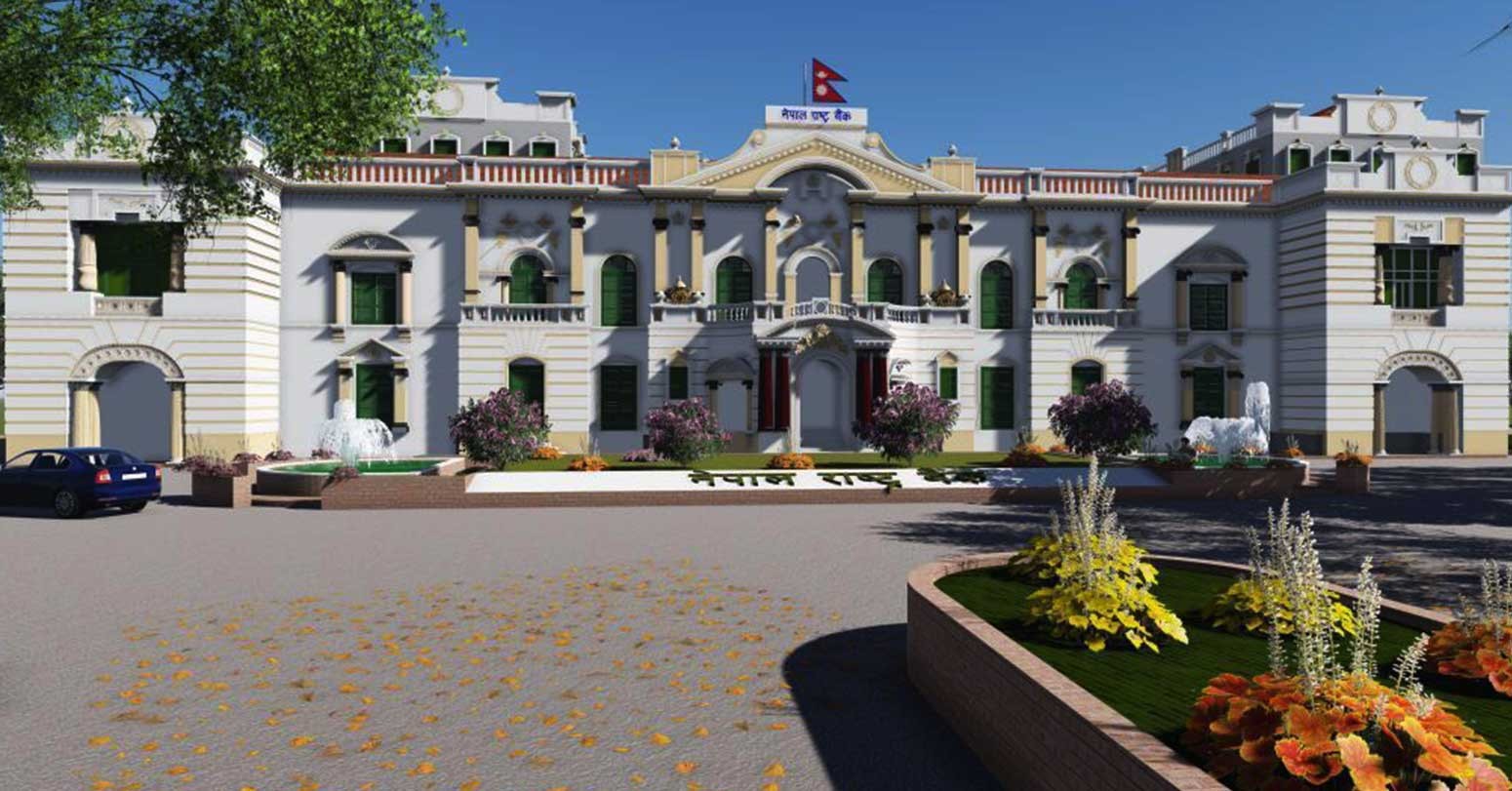
11. The construction of the physical infrastructure of the bank should be further accelerated. The buildings in Baluwatar and Thapathali have been reconstructed and handed over. The interior decoration of the said buildings should be completed and the departments outside the bank premises should be relocated as soon as possible. An office building should be constructed as per the approved master plan on land in Sanothimi of Bhaktapur and Surkhet of Karnali Province. In addition, the construction of modern buildings as per the strategic plan should be taken forward as the bank's office buildings in Biratnagar, Birgunj and Nepalgunj are dilapidated.
12. Some specialized structures should be established to make the bank's operations more effective. The bank should integrate all the data collection, processing and publication related activities into a statistics department. In this regard, the work of establishing a statistics division is in its final stages and the division should be operationalized in the near future as planned. Similarly, it is seen that a separate mechanism should be established within the bank to manage the increasing risks related to information technology and cyber security.
Related post


- Digital ICT Media PVT LTD (A Women Group)
- Tarkeshwor, Kathmandu, Nepal
- digitalictmedia@gmail.com
© 2026 All right Reversed.Banks Nepal Pvt Ltd