
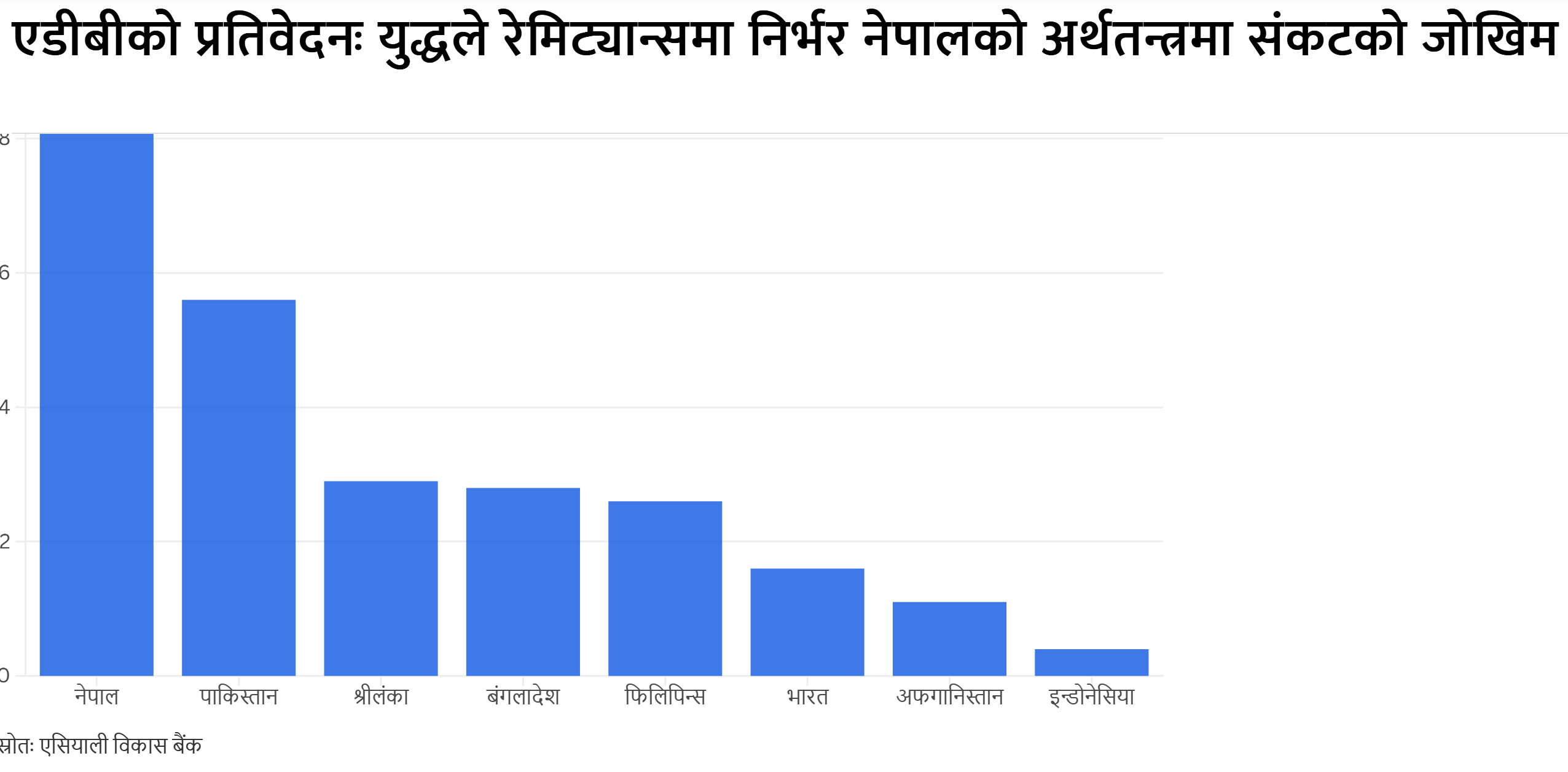
Kathmandu. The conflict in the Middle East is likely to have a serious impact on remittance-dependent economies like Nepal, according to a study by the Asian Development Bank. According to the latest report 'ADB Briefs 384' released by the Asian Development Bank (ADB), the conflict has increased the risk of rising energy prices, supply chain disruptions, tightening financial conditions and, in particular, a sharp decline in remittance flows.
The conflict will have a direct impact on remittance inflows, and the impact will be even greater in countries like Nepal that are heavily dependent on remittances from West Asia, the report said.
Key impacts of the crisis on the Nepali economy include:
- Remittance Disruption: As a huge portion of Nepal's labor force works in Gulf nations, a shutdown could drastically reduce foreign currency inflows, causing severe economic damage.
- Fuel and Commodity Price Hikes: Disrupted supply chains are causing higher fuel costs, which directly increase transportation and goods prices, leading to rising inflation and fuel rationing.
- Labor Market and Safety Concerns: Over 70,000 workers have registered for potential evacuation, increasing the pressure on the government to rescue citizens and potential loss of employment, with recruitment for new jobs halted.
- Economic Slowdown: Reduced remittance flow is decreasing purchasing power and market demand, threatening to slow down banking, agriculture (due to fertilizer shortages), and tourism sectors.
- Weakening Currency: Increased pressure on foreign exchange reserves has weakened the Nepali rupee, with exchange rates nearing 150 per US dollar.
Rising crude oil and natural gas prices have become another major challenge for countries like Nepal, which is completely dependent on imports for fuel. The price of crude oil had reached $120 per barrel due to the conflict. After the US President announced a pause in attacks on Iran for a few days, oil prices have started to rise again, indicating that the conflict will escalate again. The price of Brent crude has now reached 107 US dollars per barrel. The Asia-Pacific region is home to the world's largest oil importers, including China, India, Japan, and South Korea. If the conflict continues, the economic growth rate of developing countries in Asia will decrease by 1.3 percentage points and inflation will increase by up to 3.2 percent, according to the ADB. As a result, the Asian Development Bank projects that the inflation rate will increase at the highest rate in the South Asian region. It is estimated that the inflation rate in this region may increase by up to 4.9 percentage points.
Related post




- Digital ICT Media PVT LTD (A Women Group)
- Tarkeshwor, Kathmandu, Nepal
- digitalictmedia@gmail.com
© 2026 All right Reversed.Banks Nepal Pvt Ltd